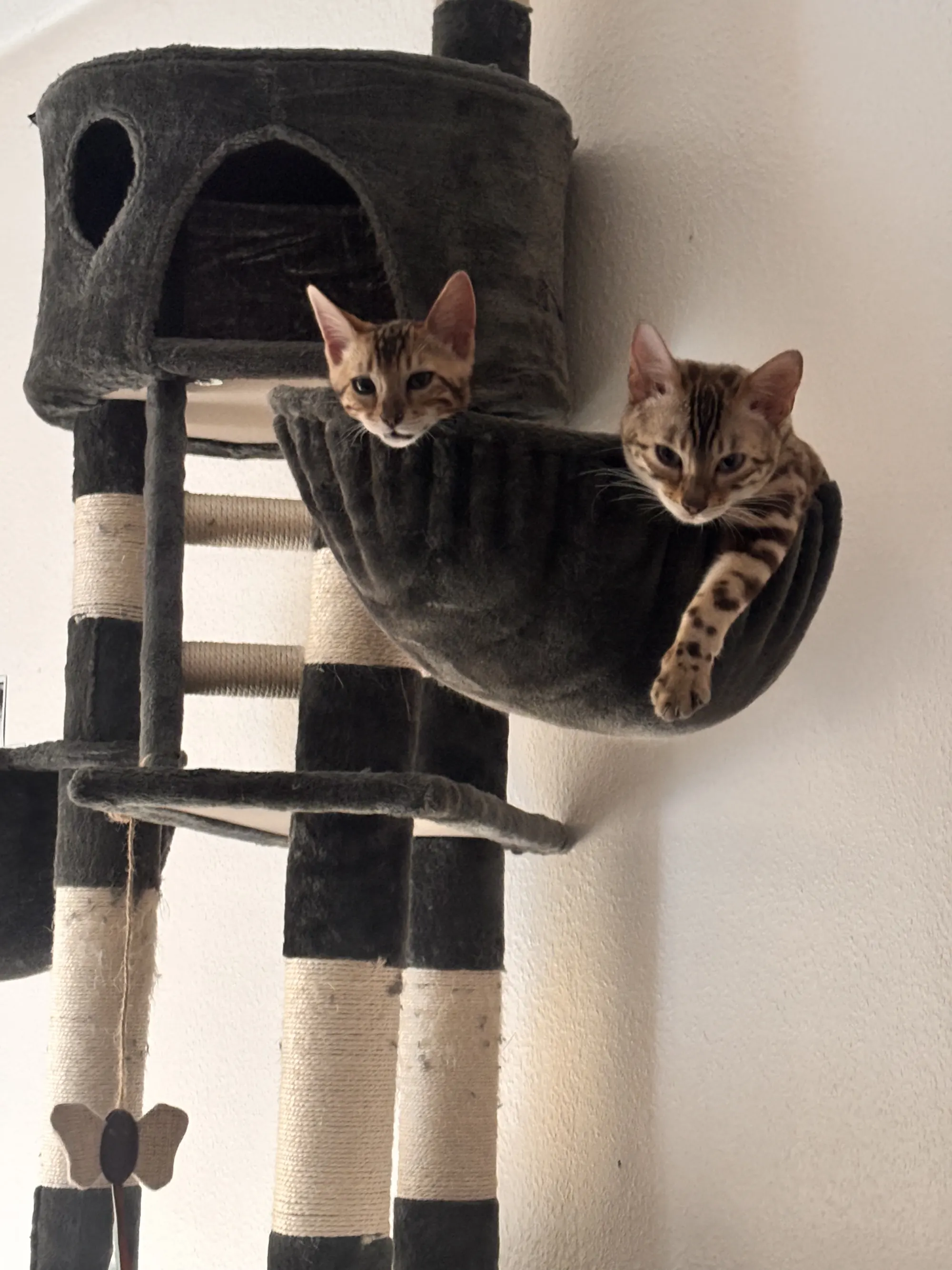
Adopting a Bengal kitten takes preparation. French law regulates the transfer to protect both the animal and you, and a few simple preparations make its arrival much smoother.
The certificate of commitment and knowledge
Since the French law of 30 November 2021 against animal cruelty, anyone acquiring a cat in France, free or paid, must sign a certificate of commitment and knowledge of the species’ needs. This document sets out the cat’s needs, its costs and the obligations that come with adopting it.
The certificate is issued by an authorised person, such as a breeder or a vet. You add a handwritten statement committing to respect the animal’s needs. The breeder keeps a copy.
Above all, at least seven days must pass between the certificate being issued and the kitten being handed over. This cooling-off period is not a formality: it gives you the time you need to confirm your choice. We therefore send you this certificate well before the planned departure.
What the law requires at the time of transfer
A kitten cannot be handed over before the age of eight weeks. That is a legal minimum: many pedigree cat breeders prefer to wait longer, so the kitten can finish learning from its mother and littermates and receive its first vaccinations. With us, no kitten leaves before three months of age.
The kitten must be identified before it is handed over, by microchip or tattoo, and registered in the French national I-CAD database. The breeder gives you the identification document and declares the change of keeper. You also receive a certificate of transfer and a veterinary certificate less than three months old.
Finally, a cat can only be presented as a “pedigree” cat if it is registered in a recognised stud book, which for cats in France is the LOOF. A Bengal sold as such must therefore have a LOOF pedigree. Without one, the ad must state that the cat does not belong to a breed.
- Certificate of commitment issued at least 7 days before
- Kitten older than 8 weeks
- Identification by microchip or tattoo, registered with I-CAD
- Certificate of transfer
- Veterinary certificate less than 3 months old
- LOOF pedigree for a cat sold as a “pedigree” cat
Preparing for its arrival
Before the kitten leaves, prepare a quiet room where it will spend its first days: a litter tray, water, its food, a bed and a few hiding places. A small space reassures it. It will discover the rest of the home gradually, at its own pace.
The Bengal loves height and play: plan for a stable cat tree, a scratching post and a few interactive toys. Remember too to secure windows and the balcony, tidy away electrical cables and toxic plants, and choose a vet near you.
Ask the breeder what the kitten eats and keep the same food for the first weeks. A sudden change of food, on top of the stress of moving, can upset its digestion. Any change is then made gradually, over one to two weeks, mixing the old and new food in small steps.
- A rigid travel carrier
- Litter, bowls and the usual food
- A cat tree and a scratching post
- Secured windows and balcony
- A vet chosen in advance
The day it leaves and the first days
On the day the kitten leaves, allow plenty of time. We take the time to introduce the kitten to you, hand over its documents and answer your questions. The journey is made in a securely closed carrier, even for a few minutes’ drive.
At home, settle it in the prepared room and let it explore. Some kittens come out to play after a few minutes, others stay hidden for a few hours. Do not force it: sit near it, talk to it softly, offer a toy. Trust comes quickly in a well-socialised kitten.
If you already have an animal, delay introductions for a few days. First swap scents, with a cloth or by switching their beds, then arrange short supervised meetings. Each animal should keep its own resources, bowls, litter tray and bed, so the kitten’s arrival is not felt as a threat.
The first weeks
Book an appointment with your vet in the days after the arrival, for a first check-up and to plan booster vaccinations. It is also a chance to check that the identification is registered in your name, and to discuss with your vet the neutering provided for in the contract for a pet cat, and the most suitable age.
Set up a routine: meals at regular times, daily play sessions, quiet moments. The Bengal is an active, curious cat that needs to burn off energy from a very young age. A kitten that plays enough is a kitten that sleeps well.
Finally, keep in touch with the breeder. A question about food, a behaviour that puzzles you, a photo to share: we love hearing news and remain available long after the kitten leaves. A kitten never completely leaves the home where it was born, and we care about following the life it leads with you.
Frequently asked questions
How long do you have to wait before collecting a kitten?
French law requires the kitten to be at least eight weeks old and a period of seven days after the certificate of commitment and knowledge is issued. The exact timing then depends on each litter. Our available and upcoming kittens are shown on the dedicated page.
Do you need to sign a new certificate of commitment for each cat?
If you have already acquired a cat and signed a certificate for this species, the regulations allow you to present it, and the breeder then gives you an information document. If in doubt, discuss it with them before reserving.
What documents will I receive with my kitten?
You will receive the identification document, the certificate of transfer, a veterinary certificate less than three months old and, for a Bengal, its LOOF pedigree or the document needed to obtain it. The health record lists the vaccinations already given.
Read next