Health
Results, not promises
Our females’ health results can be seen at our home. If you are interested, we will send them to you.
DNA tests
What DNA reveals
Some hereditary diseases of the Bengal can be detected with a simple swab. A healthy carrier can pass on the gene without being ill: that is why each breeding cat’s status matters as much as its appearance.
- PKDef: pyruvate kinase deficiency, a hereditary anaemia
- PRA-b: the Bengal form of progressive retinal atrophy
- PKD: polycystic kidney disease
Heart and viruses
Ultrasound, then FIV and FeLV
Hypertrophic cardiomyopathy (HCM) has no reliable DNA test in the Bengal: it is monitored by heart ultrasound with a veterinary cardiologist, repeated over time.
Screening for feline immunodeficiency virus and feline leukaemia is done before any breeding. It protects the cats at home and the kittens that will be born there.
Veterinary care
Kittens monitored from birth
- Vaccinations and deworming, recorded in the health record
- I-CAD microchip registration before leaving
- A vet visit and certificate before every departure
Proof
Cat by cat
The original documents can be seen during your visit, and those of its parents are given to each family with the kitten’s file.
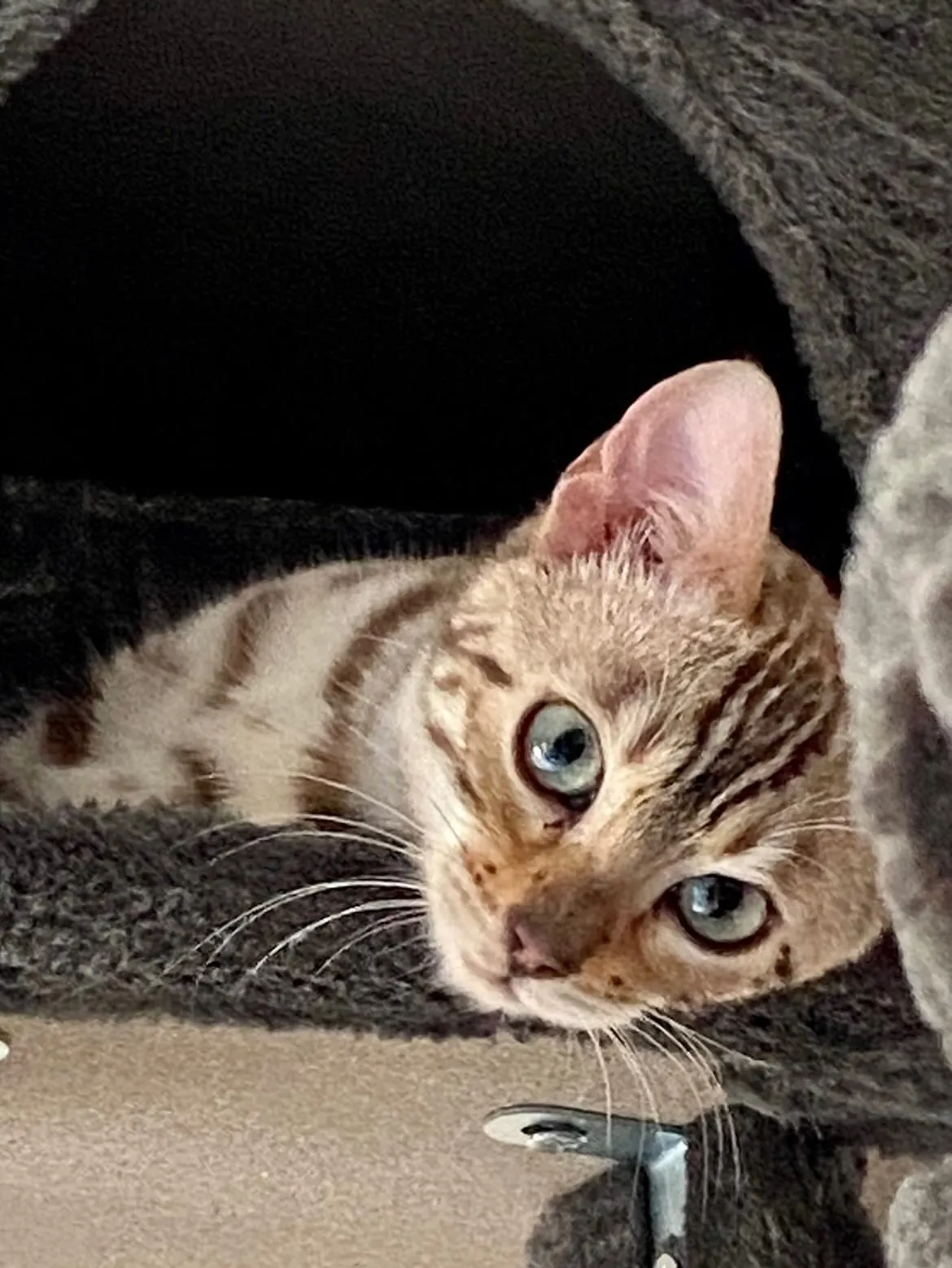 Azura →
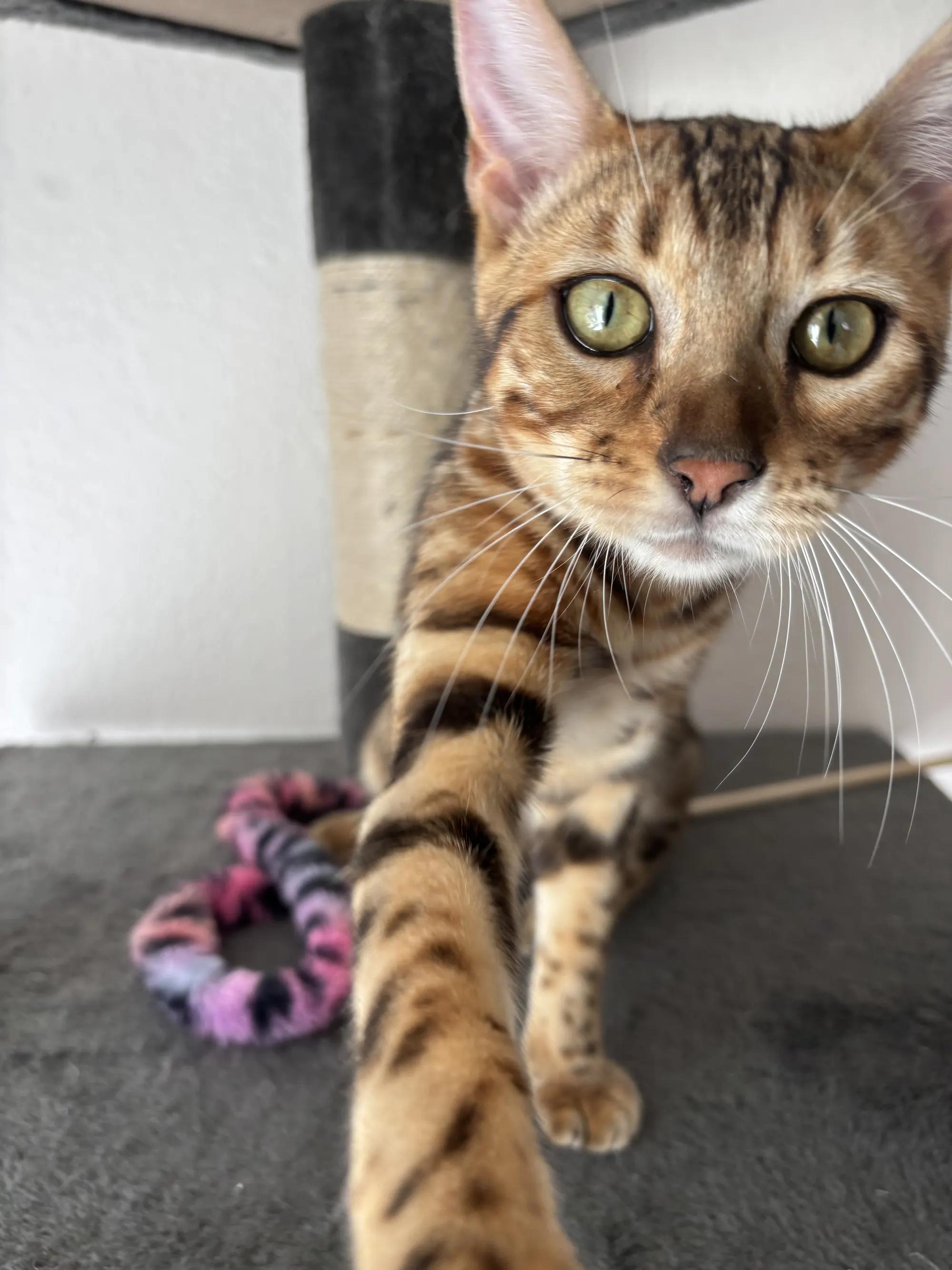 Bambi →
Frequently asked questions
What health tests do you carry out on your Bengals?
Our females are screened for FIV and FeLV and tested for PKDef and PRA-b: all their results are negative. They can be seen at our home, and we send them to interested families.
Are your Bengal kittens registered with the LOOF?
Yes, that is our commitment: in France, only a cat registered with the LOOF (the official French pedigree register) can be sold as a pedigree cat. Each kitten will leave with its pedigree, or a certificate until it is issued.
First litter
Our first litter arrives in November.
Birth expected in the second week of November. Families on the list are told first.